Search This Blog

Showing posts with label race. Show all posts

Wednesday, May 28, 2025

Long Live Love?: Sex (Mis)Education in the Netherlands

Welcome back!

Consider my bubble burst. This week, we focused on sex education in the Netherlands. We covered topics like sexting, cultural differences, right-wing resistance, and more. I had high expectations for the sex education curriculum, given how sex positive the country is. Admittedly, the sex education is miles (or kilometers) ahead of the United States' sex ed, where it is not required in some states. 


According to Alford and Hauser (2011), the United States has a teen birth rate of 61.2%. That is more than four times the teen birth rate of the Netherlands (14.1%). Our guest speaker, Willemijn Krebbekx, posits that this phenomenon is because of three reasons: use of the contraceptive pill, sex education, and a general permissive attitude. These practices allow Dutch adolescents to feel safer and grant them more autonomy, giving them the freedom to be independent while still maintaining safety. Over 60% of Dutch women in a sample reported using the contraceptive pill (Alford & Hauser, 2011). The contraceptive pill is easily accessible; the only requirement is that you are 15 years or older and have a prescription. Additionally, the pill is completely free for everyone with insurance until users are 22 years old. The cost and ease of acquiring a prescription encourage Dutch women to use contraceptives, likely contributing to the low teen birth rate. How to access and use contraceptives is taught in most Dutch sex education classes. The open and honest nature in which the Dutch discuss sex ultimately leads to more positive attitudes towards sex and more pleasure during sexual activities (Brugman, Caron, & Rademakers, 2010). The permissive attitudes also play an important role in sexual health. Sex-positive ideas contribute to a healthier relationship between sex and adolescents feel less ashamed- they don't have to hide what they are doing.  As a result, young adults feel more comfortable talking about sex with their parents, which could promote sexual health and foster feelings of comfort during sex, rather than awkwardness or shame.


Dutch sex culture is not without its flaws, though. Due to the number of women in the Netherlands who are on the pill, the burden of contraception is unequal. Women are expected to be responsible for providing contraception, creating an unequal distribution of sexual responsibility. Furthermore, sex education is not always open and judgment-free in Dutch classrooms. Discussions around STIs and sexual consequences often encourage racism and homophobia in the form of microaggressions or social exclusion (Krebbekx, 2019). Students can weaponize information against their peers, applying the things they learned to stereotypes they already have in their minds. This kind of behavior has not yet been eradicated in Dutch schools. While they are much more open on the sexual front than their United States counterparts, they still have a long way to go in regards to other forms of equality. My bubble has burst, but it can be repaired. 


Looking forward to the future,


Claire💌


Picture from the Sex Museum, a testament to the openness in the Netherlands on sexuality.

(n = 478)

References

Alford, S., & Hauser, D. (2011). Adolescent sexual health in Europe and the US. https://advocatesforyouth.org/wp-content/uploads/storage//advfy/documents/adolescent-sexual-behavior-demographics.pdf


Brugman, N., Caron, S., & Rademakers, J. (2010). Emerging adolescent sexuality: A comparison of American and Dutch college women's experiences. International Journal of Sexual Health, 22, 32-46.


Krebbekx, W. (2020). What else can sex education do? Logic and effects in classroom practices. Sexualities, 22(7-8), 1325-1341. https://journals.sagepub.com/doi/full/10.1177/1363460718779967


"I have acted with honesty and integrity in producing this work and am unaware of anyone who has not."

-Claire Adams


Sunday, May 25, 2025

History of the Netherlands from Someone who has Never Studied the History of the Netherlands

Hallo from Amsterdam!

I have just completed my first official week here in the Netherlands, and it truly has been a beautiful experience! I am learning so many new things both academically and personally. For example, I am much better at navigating public transportation than I originally thought. Yay me!

A map of my beloved metro system.

Additionally, we learned about the history of the Netherlands this week. The country has not always been the accepting, free-loving, sexually open country we know and love today. In actuality, this version of the country only came into existence following protests from the 1960s and 1970s (Mijnhardt, 2010). Prior to this, the Dutch held very different views on sexual activity. Actions such as adultery or concubinage (the cohabitation of two people premaritally) were heavily criminalized, with some instances leading to execution (Rose & Heijmans, 2021). Furthermore, interpersonal relationships were strictly regulated. While there were no explicit laws against interracial marriages, there were harsh punishments for interracial sex (Rose & Heijmans, 2021). For example, sex between an unmarried European woman and a man of a different ethnicity could warrant the same punishment as adultery, despite no infidelity having taken place (Rose & Heijmans, 2021). 

Severe punishment did not apply to men who committed the same acts, however. Instances in which a European man had sex with a non-European woman were not punished to the same degree. We discussed this kind of double standard in my Sociology of Gender class. We focused more on the social aspects of infidelity, analyzing the ways in which people respond to infidelity in women compared to men. Women almost always faced more social ostracization. This double standard was exacerbated by race. Because enslaved people were seen as property rather than human beings, enslaved women were often subject to forms of sexual abuse with no legal protections (Beckles, 2004).  Her body was not her own, and she was therefore entitled to no rights or autonomy regarding herself. In some instances, men who enslaved women would provide their male guests with an enslaved woman overnight to have sex with (I would like to note here that I understand these instances are actually rape, but I say sex instead as it would not have been considered rape at the time). The strength of these women is inspiring, but their situation is equally devastating. I can only be grateful for the progress our society has made. Despite these horrors, there were still Black people who managed to work their way into positions of power. For example, Elisabeth Samson was a freeborn Black woman who inherited a coffee plantation from her partner, a wealthy German officer (Rose & Heijmans, 2021).

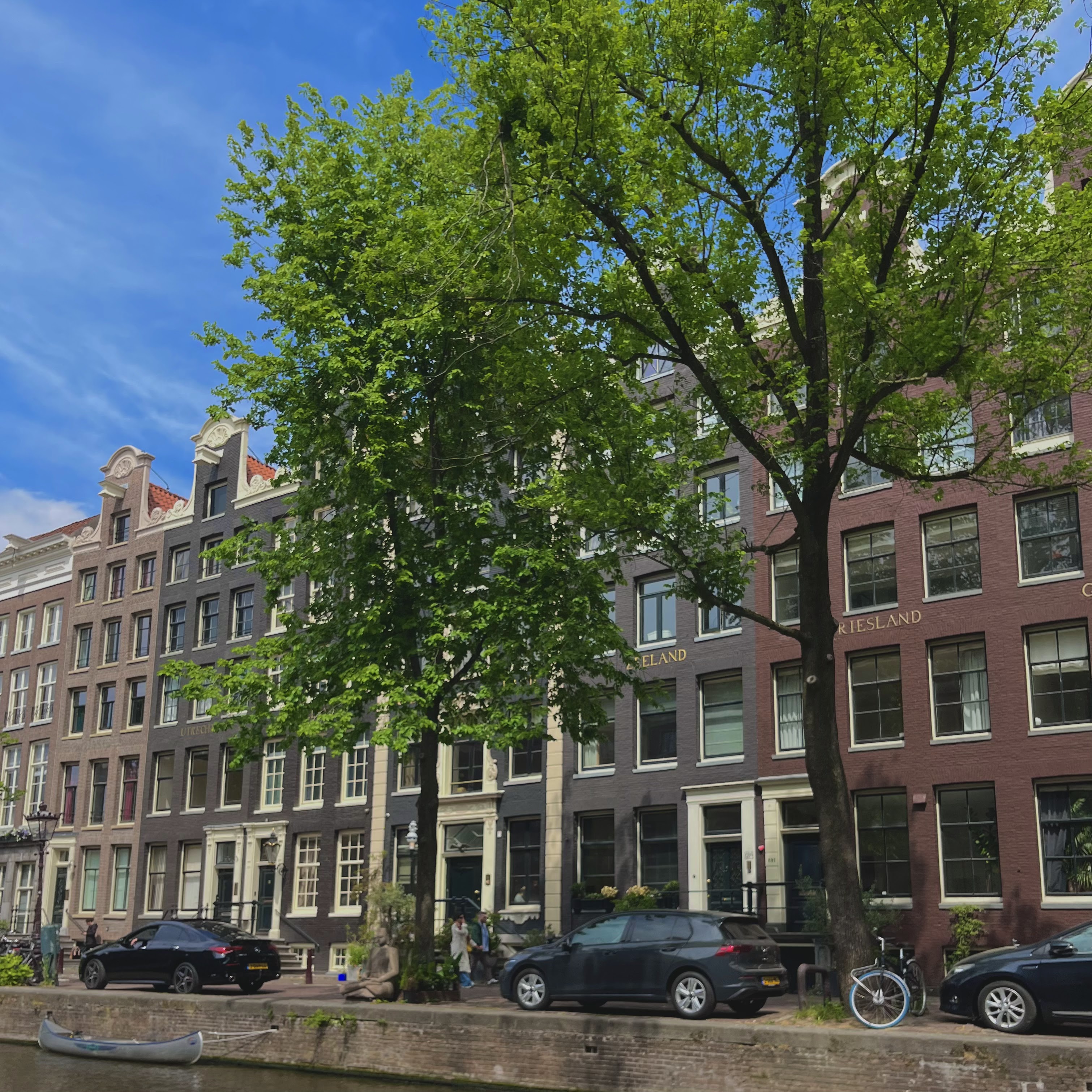
Overall, I have already learned so much from this trip, and I can't wait to learn and see more. Here's another thing I learned: some houses here are painted all black; this is because the black paint served as a warning to others that the house was infected, typically during the Black Plague. Because the houses are UNESCO World Heritage Sites, the outside facade cannot be changed, and the houses remain black to this day. 

Tot Ziens,

Claire💌


A photo from our canal tour! Notice the black houses? Spooky!

n = 450
References

Beckles, H. M. (2004). Perfect property: Enslaved Black women in the Caribbean. in E. Barrietau (Ed.), Confronting Power, Theorizing Gender: Interdisciplinary Perspectives in the Caribbean (Chapter 7). University of the West Indies Press.


Mijnhardt, W. (2010). A tradition of tolerance. In E. Beamusca & J. Verheul (Eds.), Discovering the Dutch, on culture and society of the Netherlands (Chapter 8). Amsterdam University Press.


Rose, S., & Heijmans, E. (2021). From impropriety to betrayal: Policing non-marital sex in the Early Modern Dutch Empire. Journal of Social History, 55(2), 315-344.


"I have acted with honor and integrity in producing this work and am unaware of anyone who has not"

/s/ Claire Adams